
 By
By 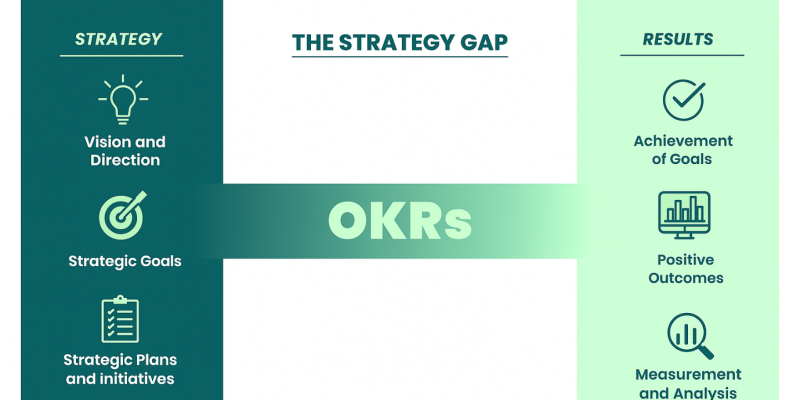
Most enterprises don’t fail at OKRs because they don’t understand the framework. They fail because the framework stays frozen while the organization keeps growing, layering, and changing shape. What once felt sharp and energizing slowly turns into a reporting exercise. You set goals. You track them. And still execution slips.
Start with Alignment, Not Metrics
Before jumping into dashboards or templates, enterprises need to slow down and ask a harder question: Are we aligned on what truly matters right now?
This is where OKR workshops can be of great assistance to teams. At Wave Nine, these sessions are designed less like training and more like working rooms. Leadership teams unpack priorities, challenge assumptions, and translate strategy into language teams can actually use. A good workshop does not give answers. It forces clarity. And clarity scales far better than rules.
Accept That One Cadence Won’t Fit Everyone
One of the biggest execution killers in large organizations is forcing every team into the same OKR rhythm. It sounds neat on paper. In practice, it creates friction.
Different teams move differently:
- Sales often work in shorter cycles
- Product and engineering need longer planning windows
- Operations tend to run on steady, predictable rhythms
Instead of fighting this, enterprises should design linked cadences:
- Company-level OKRs set direction
- Department OKRs align with that direction
- Team OKRs reflect real operating timelines.
Not identical but connected.
Reduce the Distance Between Strategy and Teams
In many enterprises, strategy lives at the top and execution lives far below. OKRs are supposed to bridge that gap, but they often don’t.
To fix this:
- Keep enterprise OKRs fewer and sharper
- Avoid vague language that can be interpreted ten different ways
- Make dependencies visible, not hidden.
If teams cannot see how their work ladders up, motivation quietly fades.
Integrate OKRs into Existing Systems
Enterprises already run on planning cycles, budgeting processes, and performance reviews. Pretending OKRs exist outside those systems is risky. When OKRs feel “extra,” people treat them that way.
Instead:
- Connect OKRs to annual planning
- Align them with budgeting decisions
- Reference them during reviews and check-ins.
Integration is not about control. It is about relevance.
Clarify Decision Rights Early
Execution slows when no one knows who can decide what. This is especially true at scale.
Strong enterprise OKR design answers questions like:
- Who approves changes mid-cycle?
- What can teams adjust on their own?
- When does leadership step in?
Clear governance removes hesitation. People move faster when boundaries are visible.
Measure Outcomes, Not Activity
This one sounds obvious. It rarely is.
Too many enterprise OKRs track effort:
- Number of initiatives launched
- Features delivered
- Meetings completed
Better execution comes from tracking impact:
- Customer retention
- Cycle time reduction
- Revenue or cost movement.
If key results don’t change behaviour, they won’t change outcomes.
Redesigning OKRs Is a Maturity Move
Enterprises don’t need “more OKRs.” They need OKRs that respect scale, complexity, and reality.
When redesigned thoughtfully with alignment, flexibility, and integration, OKRs stop being a quarterly ritual and start becoming a coordination system. And that is when execution finally catches up with ambition.









Comments