
 By
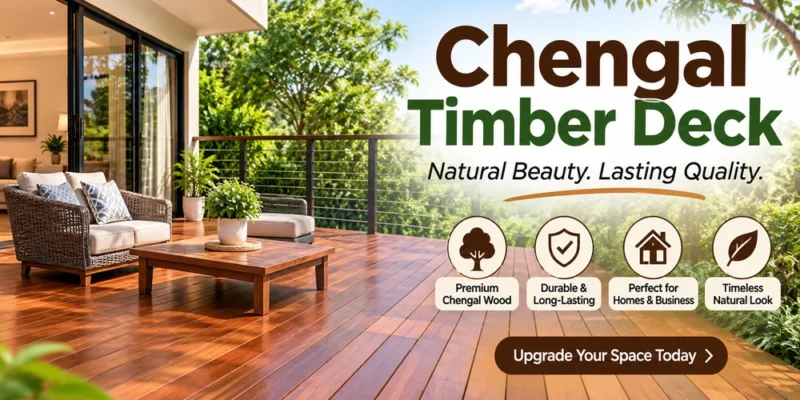
A Chengal timber deck is distinctive because it combines the natural character of Malaysian hardwood with the density, grain variation and outdoor suitability associated with this timber species. For homeowners considering natural wood decking, Chengal offers a different visual and material profile from other hardwood options such as Merbau, Balau or Teak.
Chengal is not a manufactured decking material, so no two boards are completely identical. Colour, grain and surface character can vary naturally, and outdoor exposure will gradually influence its appearance.
Its suitability for a particular deck still depends on more than the species name. Proper installation, drainage, ventilation and maintenance remain important because even durable hardwood performs best when the complete decking system is designed for the environment.
Chengal Is a Malaysian Tropical Hardwood
Chengal is a tropical hardwood associated with Malaysia and is recognised for applications where dense natural timber characteristics are valued.
As a natural material, it has its own grain, colour variation and physical properties.
These characteristics help distinguish Chengal from composite decking and from other hardwood species.
For outdoor applications, its performance should be considered together with the location, level of exposure, and installation system.
Chengal Has a Strong Natural Timber Character
One of the clearest characteristics of Chengal is that it looks and feels like natural hardwood.
The surface can show visible grain patterns, tonal differences, and board-to-board variation.
This makes a Chengal deck visually different from manufactured products that are designed to deliver a more uniform finish.
Homeowners who prefer natural variation may see this as part of the material’s appeal.
Natural Variation Is Part of the Appearance
Chengal should not be expected to have identical colour and grain across every board.
Natural timber grows with internal variations that remain visible after processing.
This can result in differences in tone, grain direction, and surface character.
The finished deck therefore develops a more organic appearance than a perfectly uniform manufactured surface.
Chengal Colour Can Vary Across the Deck
The initial colour of Chengal may vary between individual boards.
This variation can become part of the visual character of the deck, especially across larger outdoor areas.
Lighting conditions also influence how the timber appears.
Direct sunlight, shade and surrounding materials can make some tones appear warmer or darker than others.
Grain Patterns Influence the Overall Look
Wood grain refers to the visible pattern created by the structure and direction of fibres within the timber.
Chengal has its own characteristic grain tendencies, but every board can still look different.
Across a deck, this creates a surface with natural visual movement.
Board arrangement can therefore influence the overall appearance even when all boards come from the same timber species.
Chengal Is a Dense Hardwood
Density is one of the physical characteristics commonly associated with Chengal.
Dense hardwoods generally have more wood substance within a given volume, affecting weight, hardness and installation handling.
Density can be relevant when considering how boards are cut, drilled, fastened and supported.
However, it should not be treated as the only measure of outdoor performance.
Density Does Not Remove the Need for Proper Installation
A dense hardwood still needs an appropriate supporting structure and fixing system.
Poor installation cannot be compensated for simply by using a dense timber species.
Board spacing, fasteners, substructure design and drainage all remain important.
Chengal should therefore be viewed as one component within the complete decking system.
Natural Durability Is an Important Consideration
Natural durability refers to the inherent ability of timber to resist deterioration under certain environmental conditions.
Chengal is associated with outdoor use partly because of its natural hardwood characteristics.
However, natural durability should not be interpreted as immunity to prolonged moisture, poor drainage or inadequate ventilation.
The surrounding deck environment still has a major influence on performance.
Chengal Can Be Considered for Exterior Applications
Chengal has long been associated with exterior timber uses in Malaysia.
This makes it relevant for outdoor decking where natural hardwood is preferred.
Its suitability still depends on the application.
A sheltered balcony, exposed garden deck and open terrace can create different conditions even when the same timber species is used.
Patios Can Highlight Chengal’s Natural Appearance
Patio decking often functions as an extension of the home’s living space.
Chengal can provide a natural surface that works visually with furniture, landscaping and exterior finishes.
Because patios may be covered or exposed, actual weather conditions should be assessed.
A covered patio still experiences humidity and occasional moisture, while an uncovered patio receives more direct sun and rain.
Chengal Can Be Used in Garden Settings
Garden decks place timber close to landscaping, soil and vegetation.
Chengal’s natural hardwood character can visually complement these surroundings.
Practical factors are equally important.
Ground moisture, organic debris and airflow should be considered so the decking environment does not remain unnecessarily damp.
Balconies Create Different Chengal Installation Conditions
Balcony decking is usually installed over an existing structural floor.
This means available height, door thresholds and existing drainage outlets can limit how the deck is configured.
The Chengal boards and supporting system must work within these conditions.
Balcony installation should therefore be planned around the space rather than adapting the space after the timber is selected.
Terraces Can Expose Chengal More Directly
Open terraces may receive direct sunlight, rainfall and stronger wind exposure.
These conditions can make natural weathering more visible.
The timber surface may change colour more quickly than in a sheltered location.
Homeowners should therefore consider the long-term appearance of Chengal, not only how it looks immediately after installation.
Malaysia’s Climate Influences Chengal Decking
Malaysia’s tropical climate includes high humidity, regular rainfall and strong sunlight.
These conditions affect all natural timber.
Chengal may be suitable for outdoor use, but its performance still depends on how the deck manages moisture and drying.
Climate suitability should therefore be considered as a combination of timber characteristics and installation quality.
Rainfall Makes Drainage Important
Outdoor Chengal decking will regularly become wet during rain.
The surface should allow water to pass between boards, while the area below should provide a clear drainage route.
Water should not be allowed to collect unnecessarily around the timber or substructure.
Proper drainage supports the timber regardless of its natural hardwood characteristics.
Humidity Affects Timber Moisture
Natural wood absorbs and releases moisture from the surrounding air.
This hygroscopic behaviour means Chengal can respond to changes in humidity.
In Malaysia, high atmospheric moisture can slow drying after rain.
Ventilation beneath and around the deck therefore remains important.
Sunlight Changes the Surface Appearance
UV exposure gradually affects the colour of outdoor timber.
Chengal should not be expected to retain exactly the same appearance throughout its service life.
Areas receiving direct sun may change differently from shaded sections.
This variation is part of natural outdoor weathering.
Chengal Can Develop a Weathered Appearance
Natural hardwood often becomes lighter or greyer with prolonged exposure.
Chengal can also develop a weathered appearance over time.
The exact colour change depends on sunlight, rainfall, maintenance and surface treatment.
Homeowners should decide whether they prefer this natural ageing or want to manage the appearance through appropriate surface care.
Weathering Is Not Automatically a Sign of Damage
A change in surface colour does not necessarily mean the Chengal has structurally deteriorated.
Weathering and physical deterioration are different concepts.
Gradual fading or greying can be a normal surface response to outdoor exposure.
Deck condition should instead be assessed through broader factors such as board stability, fasteners, drainage and visible physical changes.
Chengal Should Be Evaluated as a Complete Decking System
The timber species is only one part of deck performance.
A complete Chengal timber deck includes boards, support framing, fasteners, gaps, drainage and ventilation.
The quality of these components can influence how well the deck functions.
Using a recognised hardwood does not eliminate the need for good system design.
Board Spacing Supports Drainage and Movement
Board gaps allow water to pass through the surface.
They also provide space for normal timber movement associated with changing moisture conditions.
The appropriate spacing depends on the timber product and installation conditions.
Boards should not be positioned too tightly simply to create a seamless appearance.
The Substructure Provides the Main Support
The substructure is the framework beneath the visible Chengal boards.
It helps maintain alignment, support and overall stability.
Its spacing should correspond with the board dimensions and decking system.
The framework should also avoid unnecessarily blocking water movement beneath the deck.
Fasteners Should Suit Dense Hardwood
Dense timber can require suitable fastening methods.
The installation approach should correspond with board profile, timber density and supporting structure.
Some systems may use visible fasteners, while others may use concealed fixing methods.
Whichever method is selected, secure attachment and correct installation should remain the priority.
Concealed Fixings Can Create a Cleaner Surface
Concealed fastening systems reduce the visibility of screws or other fixing points on the upper deck surface.
This can create a more continuous natural timber appearance.
The system still needs to provide appropriate spacing and secure attachment.
A concealed fixing method should therefore be selected based on compatibility with the decking product rather than appearance alone.
Chengal Decking Can Complement Different Architectural Styles
Natural hardwood can be used in both contemporary and more traditional outdoor spaces.
The appearance of Chengal can work with stone, concrete, glass, planting and other natural materials.
Its grain variation prevents the surface from looking overly uniform.
Board direction and deck layout can further influence how the material integrates with the property.
Board Direction Can Change the Visual Effect
The direction in which Chengal boards are installed affects how the deck is perceived.
Long boards can visually emphasise the length of a terrace or balcony.
A different orientation can help define seating or circulation zones.
Design choices should still coordinate with support and drainage requirements.
Chengal and Merbau Have Different Natural Characters
Chengal and Merbau are both tropical hardwood options, but they should not be treated as visually identical.
Merbau is commonly recognised for warm brown to reddish-brown tones and prominent grain.
Chengal offers a different natural timber character.
Homeowners should compare actual material samples rather than relying only on hardwood category labels.
Chengal and Balau Also Differ in Appearance
Balau has its own hardwood characteristics and visual profile.
Colour, grain and density can differ from Chengal.
These differences may affect both design preference and installation considerations.
Neither timber should automatically be considered the better choice without understanding the project requirements.
Chengal and Teak Serve Different Preferences
Teak is widely recognised for its distinctive natural appearance and outdoor use.
Chengal provides another hardwood choice with a different visual and physical character.
The better fit depends on the location, exposure and desired aesthetic.
A deeper comparison should consider more than species reputation alone.
Maintenance Helps Preserve Deck Conditions
Chengal decking still requires routine cleaning and inspection.
Leaves, soil and other debris can block gaps and retain moisture.
Drainage outlets should remain clear.
Maintenance supports the environment around the timber rather than attempting to prevent all natural ageing.
Cleaning Helps Control Debris
Routine cleaning removes material that can accumulate on the surface and between boards.
Garden decks may need more attention because of leaves and nearby vegetation.
Patios may collect dust and debris beneath furniture.
Cleaning frequency should therefore reflect the actual outdoor setting.
Moisture Management Remains Essential
Moisture management means helping water leave the decking system efficiently.
It does not mean preventing the timber from ever becoming wet.
Outdoor Chengal decking will naturally encounter rain.
The important factor is whether water can drain and the timber can subsequently dry.
Ventilation Supports Drying
Airflow helps moisture dissipate from beneath and around the deck.
Low-profile balcony installations can have less ventilation than elevated garden decks.
The design should therefore account for the available space.
Maintenance should also avoid blocking ventilation with stored items or excessive debris.
Surface Care Can Help Manage Colour
Surface treatments may be used when homeowners want to retain a tone closer to the timber’s newer appearance.
The appropriate method depends on the condition of the Chengal and any existing finish.
Those who prefer natural weathering may choose a different maintenance approach.
Either way, cleaning and inspection remain necessary.
Outdoor Exposure Should Shape Maintenance Expectations
An exposed Chengal deck may require different care from a sheltered one.
Sunlight, rainfall and vegetation all influence maintenance needs.
A simple comparison illustrates these differences.
| Deck Location | Main Maintenance Focus |
| Covered patio | Cleaning and humidity-related moisture |
| Garden deck | Leaves, vegetation and ground moisture |
| Balcony | Drainage access and low-profile ventilation |
| Open terrace | UV exposure, rainfall and weathering |
| Poolside | Frequent wetting and drainage |
Maintenance should follow actual site conditions rather than one fixed routine.
Chengal Is Not a Maintenance-Free Material
Natural hardwood should not be interpreted as maintenance-free.
Even timber with favourable outdoor characteristics benefits from regular cleaning, drainage checks and inspection.
Ignoring maintenance can allow leaves, dirt and blocked drains to create conditions unrelated to the timber’s inherent properties.
Routine care helps the overall system function properly.
Responsible Timber Sourcing Should Be Considered
Timber sourcing is an important consideration when natural hardwood is used.
Homeowners and project owners should consider legally and responsibly sourced material where appropriate documentation is available.
Sourcing practices should be evaluated separately from species performance.
The term Chengal alone does not automatically confirm how a particular timber product was sourced.
Chengal’s Distinctiveness Comes from More Than Durability
Chengal should not be reduced to a single claim about durability.
Its distinctiveness also comes from its Malaysian hardwood identity, natural grain, colour variation, density and ability to create a genuine timber surface.
These characteristics influence both how the deck looks and how it should be installed.
A well-planned project uses these qualities in combination rather than focusing on one feature alone.
Choosing Chengal Should Start with the Project Requirements
A Chengal timber deck should be selected because its characteristics match the outdoor application.
The evaluation should include several factors.
- Desired natural timber appearance
- Level of sunlight and rainfall exposure
- Deck location and drainage
- Available installation height
- Supporting and fastening requirements
- Maintenance expectations
This approach gives a more realistic basis for selection than choosing the species only because of its name.
Frequently Asked Questions (FAQs)
What is a Chengal timber deck?
A Chengal timber deck is an outdoor decking system that uses Chengal hardwood as the visible deck board material. The complete system also includes a supporting structure, fasteners, spacing, drainage and ventilation.
Is Chengal suitable for outdoor decking?
Chengal is associated with exterior timber applications and may be considered for outdoor decking. Suitability still depends on the specific site, installation, drainage, ventilation and maintenance conditions.
Does Chengal decking change colour outdoors?
Yes. Like other natural timber, Chengal can change colour under prolonged sunlight, rainfall and weather exposure. The degree of change depends on exposure and maintenance.
Does Chengal timber decking require maintenance?
Yes. Routine cleaning, drainage management and inspection remain important. Surface care may also be used depending on the desired appearance and condition of the timber.
Is Chengal better than Merbau or Balau?
There is no universal answer because Chengal, Merbau and Balau have different natural characteristics. The better choice depends on appearance preferences, application, exposure, installation requirements and maintenance expectations.
The Character of Chengal Comes from the Timber Itself
Chengal stands out as a natural Malaysian hardwood with its own grain, colour variation, density and outdoor character. These qualities can make it a distinctive option for patios, gardens, balconies and terraces where genuine timber is preferred.
Its natural characteristics do not remove the need for proper deck design. Drainage, ventilation, support, fastening and maintenance still determine how the complete system performs under Malaysia’s tropical conditions.
A Chengal timber deck is therefore best understood as a combination of natural material character and appropriate installation rather than simply a hardwood board selected for its name.
Explore Chengal Decking with Innodeckscape
Chengal can create a distinctive natural hardwood surface when the timber and decking system suit the intended outdoor environment. Property owners considering a chengal timber deck can get in touch with Innodeckscape to discuss Chengal decking characteristics and application considerations.







Comments