
 By
By 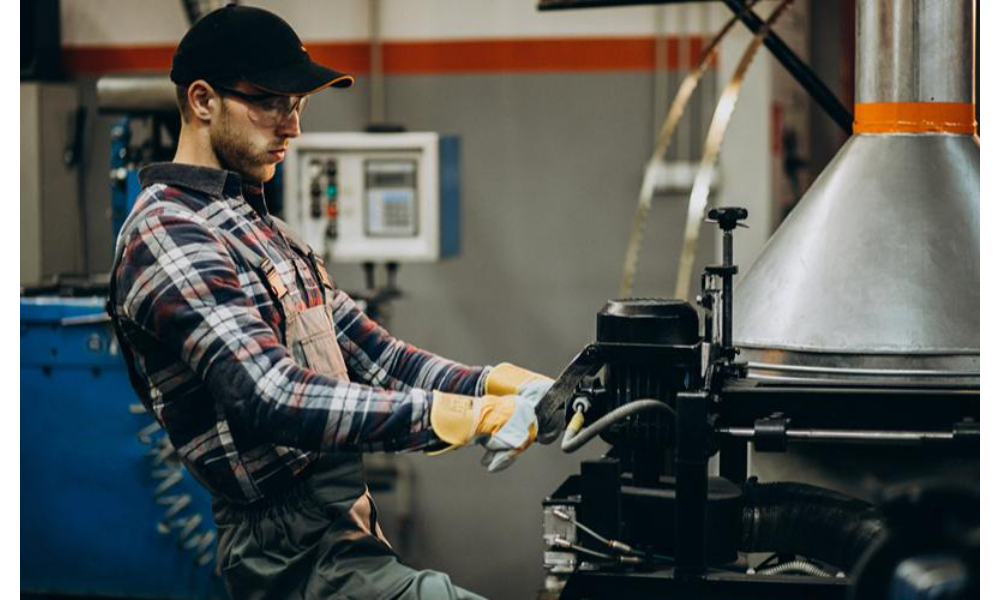
If you’ve ever wondered how manufacturers restore worn-out or damaged metal parts without replacing the whole thing, here’s a secret: selective plating. It’s a neat little technique that’s been quietly saving industries’ time and money, especially in fields where precision matters, like aerospace, electronics, and even semiconductor production.
What Exactly Is Selective Plating?
Think of selective plating as touch-up work for metal surfaces. Instead of immersing an entire component in a chemical bath, technicians apply a metal layer only where it’s needed. It’s localised, controlled, and surprisingly efficient. Using tools such as handheld plating pens or specially designed masking systems, the process allows targeted coating without affecting nearby areas.
One of the most common methods is selective nickel plating. Nickel acts as both a repair and protective layer, adding strength, corrosion resistance, and improved conductivity. It’s particularly useful when dealing with cavities or small surface imperfections that would otherwise compromise a component’s function.
Why Repair Cavities Instead of Replacing Parts?
It might sound tempting to simply swap out damaged parts, but in industries like semiconductor manufacturing, it’s not that straightforward. Each component can be highly customised, expensive, and subject to strict quality standards. That’s where selective plating becomes invaluable.
Imagine a mould cavity that starts to wear down after repeated use. Instead of manufacturing an entirely new mould, engineers can restore the original dimensions using selective nickel plating. It’s faster, cheaper, and doesn’t interrupt production for long. For companies managing tight schedules, such as those supplying parts for electronics or automotive systems, that time saved can make a huge difference.
The Role of Selective Plating in the Semiconductor World
You might not associate plating with chips and wafers, but it’s a vital step in metallisation semiconductor processes. When making integrated circuits, metal layers are deposited to create electrical connections between components. Precision is crucial here. Even a slight irregularity can affect conductivity or lead to premature failure.
In this setting, selective plating is like a surgical tool. It allows technicians to reinforce specific areas, repair bond pads, or build up contact points without exposing the entire wafer to stress. Because it’s adaptable and can be done at room temperature, there’s minimal risk of heat damage, something that traditional methods like tank plating can’t always avoid.
Efficiency and Sustainability in One Package
Here’s the part people often overlook: selective plating isn’t just precise, it’s environmentally friendly too. Since the process only uses the amount of solution required for the repair area, there’s far less waste. This targeted approach reduces chemical usage and disposal costs, which is great news for facilities aiming to improve their green credentials.
Selective nickel plating also extends the lifespan of tools, moulds, and connectors. Instead of discarding parts prematurely, they can be rejuvenated multiple times. It’s repair culture at its best—efficient, cost-effective, and sustainable.
Where Precision Meets Simplicity
At its core, selective plating is all about control. It bridges the gap between large-scale processes and fine-detail restoration, giving manufacturers more flexibility. Whether it’s fixing worn surfaces on injection moulds or maintaining contact points in semiconductor devices, this method proves that sometimes the simplest solutions are also the smartest.
You could say selective plating is like giving metal a second chance, a carefully guided do-over that restores both form and function without the fuss.
Conclusion
Selective plating might not always get the spotlight, but it’s one of those behind-the-scenes techniques that keep industries running smoothly. From restoring cavity damage to supporting metallisation semiconductor work, its precision and practicality make it indispensable.
If you’d like to learn more about how selective nickel plating can benefit your manufacturing or repair needs, get in touch with Singapore Epson Industrial today.






Comments